

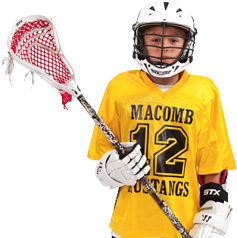
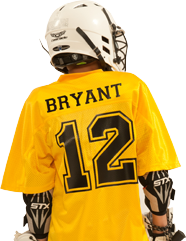
Lacrosse is widely considered to be the fastest-growing sport in America. Find out what size and type of heat transfer letters and numbers to use to make great-looking jerseys and shorts that follow the sport's uniform regulations.
![]() |
Uniform Material: 100 Denier nylon tricot mesh with two-ply poly dazzle shoulder/yoke
Recommended Material for Heat Transfer Letters and Numbers: Thermo-GRIP® Application: 330° for 6-8 seconds with medium pressure (#4) Accessories Needed: Reusable Cover Sheet, lettering layout boards, pre-mask tape |
When a customer orders front numbers for a jersey, ask them if they'd like numbers on the front of the shorts or pants of the uniform. Since you'll already be ordering that size of number, this makes for an easy add-on sale.
| Youth Size | Adult Size | |
|---|---|---|
| Name | 2" | 3" |
| Front Number | 6" | 8" |
| Back Number | 8" | 12" |
| Shorts Number | 3" | 4" |
Front jersey numbers must be at least eight inches in height; back numbers twelve inches.
Shirt must display a number six inches tall in the center of the front, and eight inches tall centered on the back. Numbers on shorts are optional, but must match the shirt number.
The jersey must have a number at least ten inches in height centered on the front. Numbers on the back must measure twelve inches in height.
Fronts and backs of shirts must be numbered. Back numbers must be at least eight inches tall, front numbers at least six inches and centered chest-level. Numbers on shorts are optional, but must match the shirt number.